
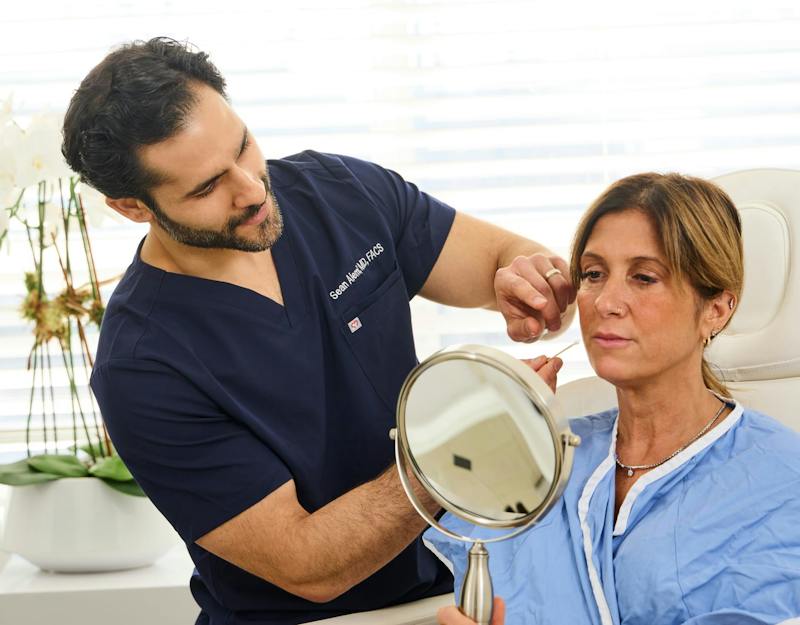
The eyes sit at the center of every expression, and even small surgical missteps are difficult to hide and often difficult to correct. Patients researching eyelid surgery in NYC need more than a list of credentials. They need a clear framework for evaluating who actually has the training, judgment, and track record to deliver safe, natural results. Dr. Sean Alemi, a double board-certified facial plastic surgeon on the Upper East Side of Manhattan, outlines exactly what separates a qualified eyelid surgeon from someone who simply lists the procedure on a menu of services.
What Is Eyelid Surgery?
Eyelid surgery, known clinically as blepharoplasty, removes or repositions excess skin, muscle, and fat around the upper or lower eyelids. The procedure can address the upper lids, the lower lids, or both, depending on whether the goal is cosmetic improvement, restored vision, or a combination of the two. The surgeon works along the natural eyelid crease to trim sagging tissue before closing the incision, and precision at that crease line is what separates a natural-looking result from one that looks obviously operated on.
Patients typically seek this procedure to correct heaviness in the upper lids, puffiness or bags below the eyes, or a tired appearance that no longer matches how they feel. Because the treatment reshapes such a visible and delicate part of the face, the surgeon's specific experience with eyelid anatomy carries more weight than general surgical credentials alone.
Why the Right Surgeon Matters More With Eyelid Surgery
Few areas of the face are less forgiving of error than the eyelids. The skin here is thinner than almost anywhere else on the body, and the underlying muscles control everything from blinking to eye closure. A surgeon who removes too much skin or fat can leave a patient with a hollow, overdone look or, in more serious cases, difficulty closing the eyes fully.
A patient cannot simply confirm "board certified in plastic surgery" and stop there. The most reliable outcomes come from surgeons with specific, high-volume experience in facial and periocular anatomy. Dr. Alemi built this expertise through a facial plastic surgery fellowship focused entirely on the face, eyes, and neck, rather than general body procedures.
Before scheduling a consultation, patients should confirm the following:
- The surgeon is board-certified in a specialty that specifically covers facial or eyelid surgery
- The surgeon has documented experience performing blepharoplasty, not just general cosmetic procedures
- Before-and-after photos show consistent, natural-looking results across a range of patients
- The surgical facility meets recognized accreditation standards
- Consultations include a real conversation about anatomy and goals, not a rushed sales pitch
Board Certification Is the First Filter, Not the Only One
Board certification tells a patient that a surgeon has completed rigorous training and passed independent examination, but not every certification carries the same weight for eyelid surgery specifically. A surgeon can be board certified in general surgery, dermatology, or even a non-surgical specialty and still legally perform cosmetic procedures in many states.
For eyelid surgery, the two certifications that matter most are the American Board of Facial Plastic and Reconstructive Surgery and the American Board of Otolaryngology, Head and Neck Surgery. Dr. Alemi holds both. Earning them requires a five-year head and neck surgery residency followed by a competitive one-year fellowship dedicated entirely to facial plastic and reconstructive procedures, a fellowship offered to only a small number of surgeons nationally each year. Patients can verify any surgeon's certification directly through the certifying board's public directory before booking a consultation.
Double board certification carries particular weight for eyelid surgery because it confirms training on two fronts: the broader anatomy of the head and neck, and the more specialized art of facial rejuvenation. A surgeon who has only completed one track may understand the mechanics of an incision without the aesthetic judgment needed to keep results looking proportional to the rest of the face.
Look for Subspecialty Experience With the Eye Region
General plastic surgery training touches on eyelids, but it does not compare to a practice built around facial anatomy. Surgeons who spend the bulk of their career operating on the midface, brow, and periorbital area develop a level of familiarity with eyelid crease placement, fat pad anatomy, and skin elasticity that generalists rarely match.
Patients evaluating a surgeon should ask how frequently they perform blepharoplasty and whether it makes up a meaningful share of their overall practice. Dr. Alemi's practice is built exclusively around facial rejuvenation, giving him repeated, concentrated experience with the eyelid anatomy that a mixed cosmetic practice may only encounter occasionally.
Questions to Ask During a Consultation
A consultation should feel like a genuine evaluation of the patient's anatomy and goals, not a scripted pitch. Useful questions include:
- How many blepharoplasty procedures have you performed, and how often do you perform this specific surgery?
- What complications have you encountered, and how were they resolved?
- Will you personally perform the entire procedure?
- What technique do you recommend for my anatomy, and why?
- Where will the surgery take place, and is that facility accredited?
The way a surgeon answers these questions often reveals more than the answers themselves. A surgeon confident in their training will walk through specifics rather than deflecting to generic reassurance.
Watch for These Warning Signs
Some signals suggest a patient should keep looking. Surgeons who avoid direct questions about volume or complications, who pressure patients to book quickly, or who cannot produce a substantial photo gallery of their own eyelid surgery patients should raise concern. So should any practice that lets non-physician staff perform the surgical portion of the procedure. Eyelid surgery is a surgical operation, and it should be performed by the surgeon whose name is on the consultation, not delegated to someone else in the practice.
Facility Accreditation Matters as Much as the Surgeon
Where a procedure takes place is just as important as who performs it. An accredited surgical facility follows hospital-level safety protocols for anesthesia, sterilization, and emergency preparedness. Patients considering eyelid surgery in NYC should confirm that the facility carries recognized accreditation, such as certification from the American Association for Accreditation of Ambulatory Surgery Facilities.
Dr. Alemi performs surgery in a private, AAAASF-accredited surgical center on the Upper East Side of Manhattan equipped with two hospital-level operating rooms and a dedicated recovery suite. This level of infrastructure reflects a broader commitment to patient safety that extends well past the operating table.
Why Patients Choose Dr. Sean Alemi for Eyelid Surgery in NYC
Patients researching a qualified eyelid surgeon in New York consistently look for the same combination: verifiable credentials, focused experience, and a surgeon who listens before recommending a plan. Dr. Alemi built his practice around exactly this standard. He trained under renowned facial plastic surgeon Dr. Andrew Jacono, gaining concentrated experience across thousands of facial procedures before opening his own Manhattan practice.
His approach to eyelid surgery mirrors his broader philosophy across facial procedures: subtle, natural changes that restore a refreshed appearance without altering a patient's fundamental features. Every consultation begins with a detailed evaluation of eyelid anatomy, skin elasticity, and the patient's specific goals, followed by a personalized surgical plan rather than a one-size-fits-all recommendation.
Who Is a Good Candidate for Eyelid Surgery?
Strong candidates are generally in good overall health, do not smoke, and have realistic expectations about what the surgery can achieve. The Cleveland Clinic notes that while blepharoplasty is primarily a cosmetic procedure, it can also improve the field of vision for patients whose sagging upper eyelids obstruct their sight, which is why some candidates pursue it for functional reasons as well as aesthetic ones. Common concerns that bring patients in for a cosmetic consultation include heavy or hooded upper lids that affect eye shape and under-eye bags that make a patient look tired regardless of sleep.
Dr. Alemi evaluates each patient's skin quality, muscle tone, and bone structure individually rather than applying a standard technique to every case, since eyelid anatomy varies considerably from one patient to the next.
FAQs
What credentials should I look for in an eyelid surgeon?
Look for board certification through the American Board of Facial Plastic and Reconstructive Surgery or the American Board of Otolaryngology, Head and Neck Surgery. These certifications confirm specialized, examined training in facial and eyelid anatomy rather than general surgical experience.
Is eyelid surgery only cosmetic?
No. Blepharoplasty can address both cosmetic concerns, such as puffiness or a tired appearance, and functional issues like drooping upper lids that obstruct vision. A qualified surgeon evaluates both during consultation.
How long does recovery from eyelid surgery take?
Most patients see significant improvement in swelling and bruising within two to three weeks, though full healing continues gradually over several months. Recovery timelines vary based on individual anatomy and the extent of the procedure.
Can I ask to see before-and-after photos specific to my concerns?
Patients should always ask for this. A qualified surgeon will have a substantial gallery organized by procedure type and will show examples that closely match a prospective patient's anatomy and goals.
Does facility accreditation actually affect safety?
It does. Accredited facilities are held to hospital-level standards for anesthesia administration, sterilization, and emergency response, which meaningfully reduces surgical risk compared to unaccredited settings.
Take the Next Step Toward Choosing the Right Surgeon
Selecting a surgeon for eyelid surgery deserves the same scrutiny as any major medical decision. Patients who verify board certification, ask direct questions about experience, and confirm facility accreditation put themselves in the strongest position for a safe, natural outcome. Dr. Alemi welcomes prospective patients to schedule a consultation to discuss their goals and learn whether eyelid surgery is the right fit.