
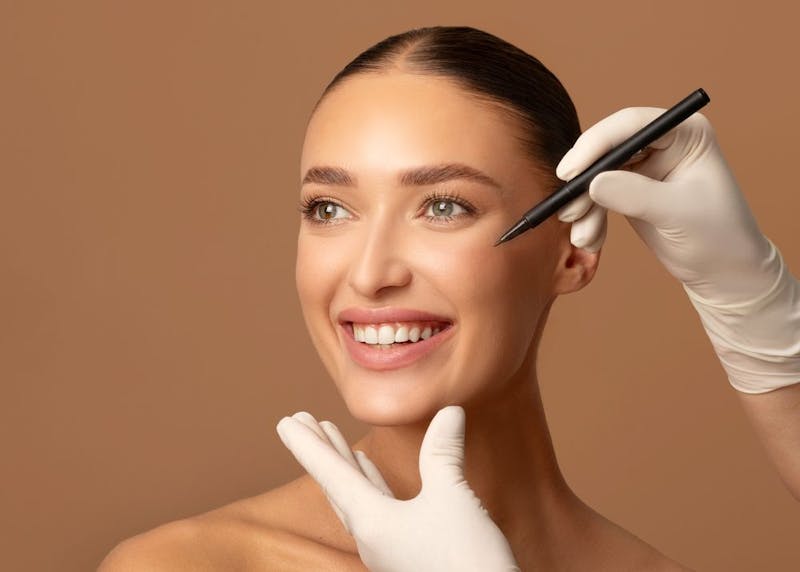
The eyes are often the first place age shows up, and the fix depends entirely on where the change is happening. Upper blepharoplasty addresses hooded, heavy eyelids that can make you look tired or older than you feel, while lower blepharoplasty targets under-eye bags, puffiness, and loose skin. Some patients need one. Many need both. Dr. Sean Alemi, a double board-certified facial plastic surgeon at his Upper East Side Manhattan practice, evaluates each patient's unique eye anatomy so the plan he builds fits that patient specifically, not a generic template.
Choosing between upper and lower eyelid surgery is not something a patient should guess at from a mirror. It takes an experienced eye to tell the difference between skin laxity, fat displacement, and volume loss, since each requires a different surgical strategy. This guide breaks down what separates the two procedures, who tends to need which one, and how Dr. Alemi builds a personalized surgical plan around your specific concerns.
What Is the Difference Between Upper and Lower Blepharoplasty?
Upper blepharoplasty removes excess skin and, when needed, fat from the upper eyelid to open up the eye and eliminate the heavy, hooded look that comes with age. Lower blepharoplasty addresses the under-eye area, correcting puffiness, bags, and fine wrinkling by removing or repositioning fat and tightening loose skin.
Blepharoplasty can be performed on the upper eyelids, the lower eyelids, or both, since aging skin gradually loses elasticity and gravity pulls excess tissue into both areas over time. The two procedures address distinct tissue layers, which is why surgeons rarely use identical techniques for both.
Upper eyelid skin is thin and prone to stretching, so surgery there is largely about skin and muscle removal. The lower lid holds fat pads that shift and bulge with age, so surgery there often focuses on repositioning that fat instead of simply cutting skin away. Dr. Alemi tailors his technique to whichever layer is actually causing the concern, which is a large part of why his results tend to look subtle instead of surgical.
Signs You May Benefit From Upper Eyelid Surgery
Upper blepharoplasty tends to suit patients dealing with:
- Hooded or heavy-looking upper eyelids that make you appear tired or older
- Excess skin that rests on the lash line or interferes with eye makeup application
- Skin folds that obscure the natural crease of the eyelid
- A "sad" or "angry" resting expression caused by drooping skin
- In more advanced cases, upper eyelid skin that sags low enough to affect peripheral vision
That last point is worth understanding, since it separates cosmetic upper blepharoplasty from the functional kind. When drooping skin genuinely blocks part of a patient's field of vision, the surgery can move from elective to medically necessary, which changes both the evaluation process and how insurance may factor into the conversation.
Signs You May Benefit From Lower Eyelid Surgery
Lower blepharoplasty is usually the better fit for patients who notice:
- Persistent under-eye bags that don't improve with sleep or skincare
- Puffiness caused by fat pads pressing forward against thinning skin
- Loose or crepey skin beneath the eye
- A tired or aged appearance centered under the eyes instead of above them
- Shadowing or hollowing at the tear trough that makeup can't fully conceal
Patients sometimes assume lower eyelid bags are a sign of poor sleep or dehydration, but in most adults over 35 the cause is structural: fat that has always been there simply becomes more visible as the surrounding skin and supporting tissue weaken.
Can You Need Both Upper and Lower Blepharoplasty at the Same Time?
Needing both upper and lower blepharoplasty is more common than many expect. Facial aging rarely respects a clean line between the upper and lower lid, so a patient with heavy upper eyelids often has some degree of lower lid puffiness as well, even if one concern is far more visible than the other.
Combining both procedures in a single surgical session offers a real advantage: one recovery period instead of two, and a more balanced, proportional result since the entire eye area is addressed together in one plan. Dr. Alemi evaluates the upper and lower lids independently during consultation, then builds a single surgical plan when both areas warrant correction, always aiming for results that look proportional to the rest of the face.
How Dr. Alemi Determines Which Procedure Is Right for You
Candidacy comes down to a hands-on evaluation, not a checklist. During consultation, Dr. Alemi examines skin elasticity, fat distribution, muscle tone, and the position of the brow, since a low or heavy brow can sometimes mimic upper eyelid hooding and lead to the wrong procedure being recommended elsewhere.
A few factors typically guide the decision:
- Where the excess tissue actually sits: Upper lid skin excess calls for upper blepharoplasty; lower lid fat or skin laxity calls for the lower procedure.
- Whether vision is affected: Functional cases involving visual field obstruction are evaluated differently than purely cosmetic ones. A peer-reviewed report from the American Academy of Ophthalmology, published through the National Library of Medicine, found that most insurers require documented superior visual field loss of roughly 24 to 30 percent before upper eyelid surgery qualifies as medically necessary, which is why proper documentation matters when vision is genuinely involved.
- Overall facial balance: Dr. Alemi considers the brow, cheek, and midface together, since correcting the eyelids without accounting for surrounding structures can create a mismatched result.
- Health and healing factors: General health, prior eyelid procedures, and any history of dry eye are reviewed to keep recovery smooth and predictable.
This is also where board certification matters most. Eyelid anatomy is unforgiving of guesswork, and a surgeon without dedicated facial training can misjudge how much skin to remove or where fat truly needs repositioning.
What Does Recovery Look Like for Upper Vs. Lower Blepharoplasty?
Recovery differs slightly between the two, though both are typically outpatient procedures. Upper eyelid recovery tends to be quicker, with most patients noticing significant bruising and swelling resolve within one to two weeks. Lower eyelid recovery can take a bit longer, closer to two to three weeks, since the tissue disturbed sits closer to the more vascular under-eye area.
Patients who undergo both procedures together generally follow a recovery timeline similar to lower blepharoplasty alone, since the two surgeries heal on overlapping schedules. Dr. Alemi provides a personalized recovery plan for every patient, with clear guidance on cold compresses, activity restrictions, and follow-up visits so healing stays on track.
Common Questions and Concerns About Eyelid Surgery in Manhattan
Patients researching blepharoplasty often carry the same worries into consultation, and most of them come down to a fear of looking "done." A well-performed upper or lower blepharoplasty should never pull the eye into an unnatural shape or erase the eye's natural contour. Dr. Alemi's approach favors conservative, precise tissue removal specifically to avoid the hollow or overly tight look that gives cosmetic surgery a bad name.
Scarring is another frequent concern, and a reasonable one. Upper eyelid incisions are placed directly within the natural eyelid crease, and lower eyelid incisions are often placed just below the lash line or hidden inside the lower lid itself, which typically leaves any resulting scar difficult to detect once healed.
Insurance coverage comes up often as well. Purely cosmetic blepharoplasty is not covered by insurance, but functional upper eyelid surgery performed to correct documented vision obstruction sometimes is, depending on the plan and the degree of visual field loss on record.
Why Choose Dr. Sean Alemi for Blepharoplasty?
Dr. Alemi is a double board-certified facial plastic surgeon, certified by both the American Board of Otolaryngology and the American Board of Facial Plastic and Reconstructive Surgery. He trained under Dr. Andrew Jacono, one of the most respected names in facial plastic surgery, and later joined Dr. Jacono's practice as an associate before opening his own Upper East Side practice in Manhattan.
Precision around the eyes requires an intimate understanding of facial anatomy as a whole, and Dr. Alemi's dual training in facial plastic surgery and head and neck surgery supports exactly that kind of comprehensive view. His surgical philosophy centers on subtlety: results that look like a rested, refreshed version of the patient.
Every blepharoplasty patient at Alemi Facial Plastic Surgery also benefits from the practice's dedicated post-operative support. Nurse practitioner Carolyn Alemi, NP-C, oversees pre- and post-operative care personally, guiding patients through healing with the kind of attentive, individualized follow-up that larger practices often can't offer. Procedures take place in the practice's own AAAASF-accredited surgical facility, built to hospital-level safety standards for patient comfort and protection throughout the process.
FAQs
Is upper or lower blepharoplasty more common?
Eyelid surgery overall is currently the most performed facial cosmetic procedure in the country. The American Society of Plastic Surgeons reported 120,755 blepharoplasty procedures performed nationwide in 2024, ahead of facelifts, rhinoplasty, and every other facial surgical procedure that year.
How long do blepharoplasty results last?
Upper eyelid results tend to last many years, sometimes a decade or longer, since the skin removed does not grow back. Lower eyelid results are similarly long-lasting, though ongoing skin aging can eventually soften the outcome over time.
Can non-surgical treatments replace blepharoplasty?
Non-surgical options like fillers or skin tightening treatments can soften mild volume loss or fine lines, but they cannot remove excess skin. Patients with true skin laxity or hooding typically need surgery to see meaningful, lasting improvement.
Will I need anesthesia for eyelid surgery?
Most patients undergo blepharoplasty with local anesthesia and light sedation, skipping general anesthesia altogether, which supports a smoother, faster recovery for most healthy adults.
How do I know if my case is cosmetic or functional?
A consultation with a qualified facial plastic surgeon, including a visual field assessment when appropriate, is the only reliable way to determine whether upper eyelid surgery is medically necessary or elective in your specific case.
Ready to Decide Between Upper and Lower Blepharoplasty? Dr. Alemi Can Help
The right eyelid surgery depends entirely on your anatomy, your goals, and whether one or both eyelid areas are contributing to how tired or aged you look. Dr. Alemi's combination of double board certification, advanced facial plastic surgery training, and a practice built around personalized, compassionate care makes him well positioned to guide that decision with real precision.
If you're ready to explore upper blepharoplasty, lower blepharoplasty, or a combined approach at his Manhattan practice, schedule a consultation with Dr. Alemi to find out which path will get you the natural, refreshed result you're looking for.